INTRODUCTION
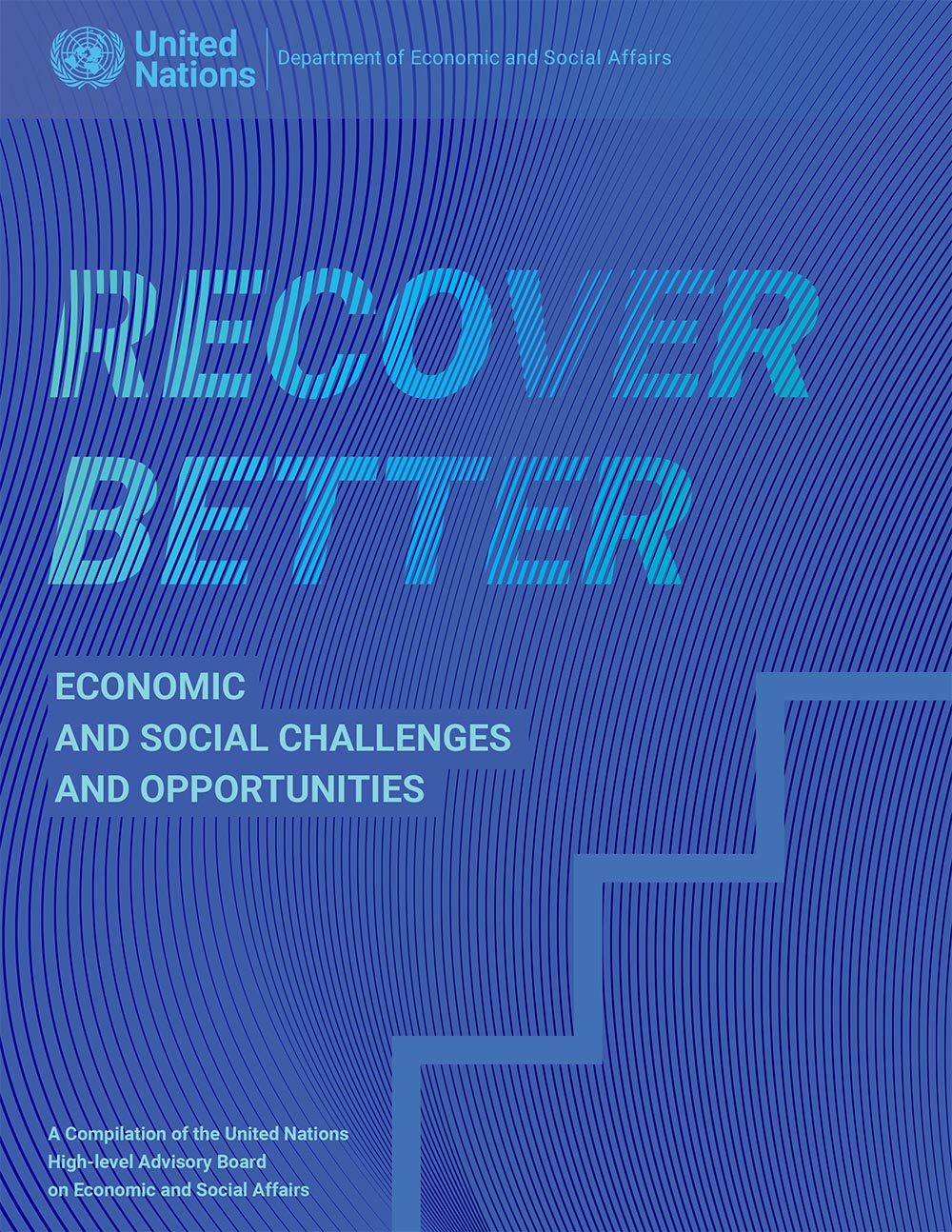
The United Nations High-level Advisory Board (HLAB) on Economic and Social Affairs was established in June 2018 to help strengthen the United Nations Department of Economic and Social Affairs (UN DESA) in the context of United Nations development system reform, and as a key npart of efforts to enhance support to Member States of the United Nations in implementing the 2030 Agenda for Sustainable Development.
The HLAB consists of sixteen globally renowned experts in the economic and social policy fields, including former Heads of State, a Nobel Laureate, former Senior Government Officials and intellectual leaders. It has provided guidance to the research and policy analysis work of UN DESA, including topics for its flagship publications. The Board members themselves have played an active role in strengthening the linkage between UN DESA and the global economic and social policy research community, and have promoted UN DESA publications and reports at national and global levels.
The Board also, through its bi-annual meetings, has provided advice to the United Nations on broad economic and social issues, including near-term prospects and risks for the world economy, frontier technologies, inequality, migration, issues associated with countries in special situations, as well as the implications of these issues for multilateralism and the implementation of the 2030 Agenda for Sustainable Development.
Over the course of the last two years, the HLAB has deliberated on many contemporary and cross-cutting issues and challenges. The interventions and insights of the Board have greatly expanded our understanding of issues of important economic and social significance and inspired the United Nations to break new ground in policy research. This volume is envisaged as the legacy of the first HLAB to advancing the sustainable development agenda.

https://register.gotowebinar.com/register/2186405667765198863?fbclid=IwAR1kE59U6NgdVMzbA-qeHJGgn84PZr2ERtaHKh2HQvf75F9yiNXSXG1bVlU


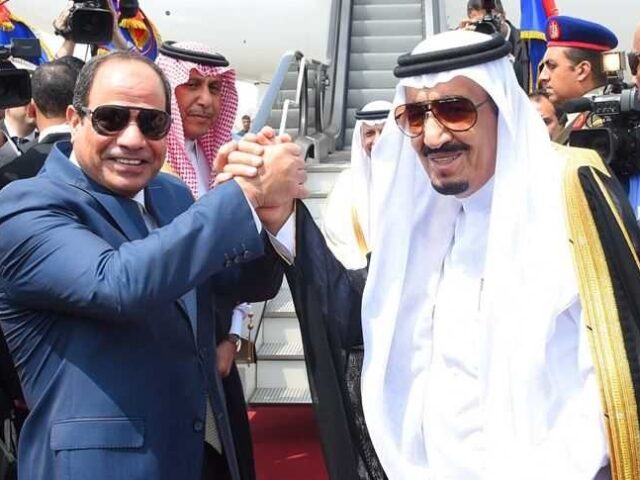
The president of the United Nations Union federation,Mr. Christophe Giovannetti welcomes the Egyptian initiative and praises Saudi Arabia for the Egyptian initiative for a ceasefire in Libya
The President of the United Nations Organization federation(UNF) Mr. Christophe Giovannetti welcomed the Egyptian initiative for a cease-fire in (Libya) and also praised the Kingdom of Saudi Arabia’s support for the Egyptian initiative, as he mentioned that this matter comes within the role of Egypt and the Kingdom that aims to enhance the security and stability of the region according to the system of conservation International peace and security, and their commitment to the principles of the United Nations Charter and the rules of international law

First : An indication of the conditions the world is going through with problems in the conflict countries in general and in particular the Middle East, which threatens the security and stability of the countries. Therefore, the Executive Council, in coordination with the United Nations Ad- ministration, proposed the establishment of a crisis resolution committee to assist conflict countries And with the participation of senior figures to closely study and monitor the si- tuation to propose solutions to stop the special deterioration in some countries that suffer from humanitarian, economic and security crises, especially in the Middle East, Africa, Asia and Eastern Europe. (Attached is the decision to establish the committee and the names of its members from the proposed executive council, and their description accor- ding to the official news issued by the Communications and Information De- partment at the United Nations).
Second : Amending some positions of consultants.
Major General Alaa Abdel-Rahman Shaker, Vice President and Member of the Executive Council Member of the Crisis Resolution Committee elected by the Executive Council as Chairman of the Department of the Crisis Resolution Committee.
1- Modification of the position of Major General Mohammed Freih Al-Har- thy from the position of assistant vice president to the position of vice pre- sident, member of the Executive Council and member of the Crisis Resolution Committee elected by the Executive Council.
2- Modification of the position of Mrs. Nadia Zaza from a Special Adviser to the Senior Adviser to the UNF and responsible for the Geneva Administration Office while continuing her previous position as Head of Special Affairs.
3- Amending the position of Mrs. Manal Abdel Hamid, known in Al-Absi.
from a special advisor to the senior advisor in Egypt responsible for Egypt’s affairs and its suburbs
4- Modifying the position of His Excellency Dr. Abdin Al-Sharif from the po- sition of Environmental Adviser in Sudan to the Senior Adviser and Respon- sible for Sudan Affairs in his country
5- Modifying the position of Mr Izz Al-Din Skaf from the position of Special Media Adviser to the Senior Media Adviser in Lebanon while continuing his previous position as Chairman of the Special Affairs Committee for Humanita- rian and Social Work in Lebanon
6- Amending the position of Ambassador Al-Hussein Javan from the position of advisor in Libya to the chief adviser and responsible for Libya’s affairs in his country
7- Amending the position of Ambassador Dr. Imad Shaat from the position of Special Adviser in Palestine to the Senior Adviser
And responsible for the affairs of Palestine in his country
8- Amending the position of Ambassador Ahmed Al-Shamsat from a special diplomatic advisor in Lebanon to the senior diplomatic advisor at the UNF
9- Amending the position of Consul Bonnah Mohamed from the position of Special Adviser in Mauritania to that of Senior Adviser and Responsible for Mauritanian Affairs and Cape Verde
10- Amending Mr. Nabil Badr’s position from an advisor in America to a spe- cial advisor in America and its environs
11- Modifying the position of Mrs. Ghalia Al-Rifai from the position of special advisor to the position of public relations and protocol advisor in Lebanon
12- Appointment of Mr. Fares Wehbe, California Human Rights Adviser.
13- Mr. Tariq Karim Jableh appointed a Special Criminal Adviser in Tunisia.
14- Mrs. Salwa Murad appointed as Tourism Advisor in Lebanon.
15- Modifying the position of Mrs. Jessica Abdel-Ahad from the position of Economic and Business Adviser to the position of Humanitarian and Business Adviser in Lebanon.
Issued by the main administration Paris on: 1/6/2020 Monday Media office in Beirut Media adviser Ezzeddine Skaf Beirut 1/6/2020 AD The timing It is 11 in the morning on Monday .


A reference to the conditions the world is going through with problems in the conflict countries in general and in particular the Middle East, which threatens the security and stability of the countries.
Therefore, the Executive Council, in coordination with the Unions Nations Administration, proposed the establishment of a crisis resolution committee to assist conflict countries.
And with the participation of senior figures to study and closely follow the situation to propose solutions to stop the deterioration in countries suffering from the collapse of humanity, economic and security, especially the Middle East, Africa, Asia and Eastern Europe. Attached herewith is the decision to establish the committee and the names of its members from the proposed executive council, and their description according to the official news issued by the Unions Nations Communications and Information Department
Major General Alaa Abdul-Rahman Shaker :
Vice President of the Unions Nations Federation
Member of the Executive Council
Member of the Crisis Resolution Committee, elected by the Executive Council, and the Chairman of the Crisis Resolution Committee
General (2S) Didier Lot, vice president of the Unions Nations federation, expert in military security and counter-terrorism affairs
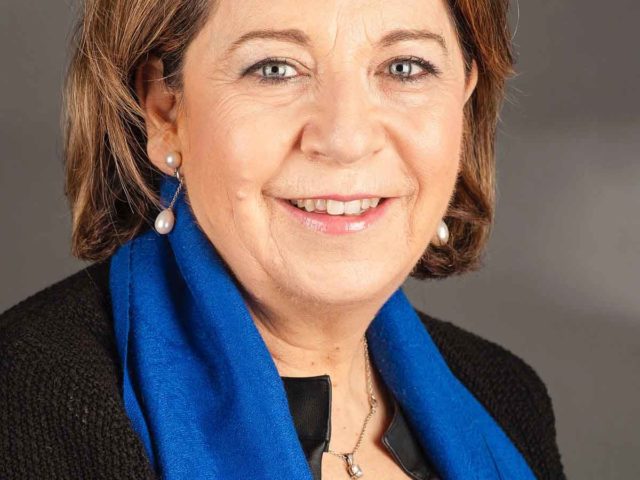
Mrs. Corine Loupage, Lawyer for the former Minister of the Environment of the French Republic, President of the Friends of the Universal Declaration of Human Rights,
Mr. Christophe Giovanetti, President of the Unions Nations federation, and expert in diplomatic and humanitarian relations,
Mr. Ricardo Espinoza, Vice President and Member of the Executive Board of the Union Nations federation Executive, Advisor for International Publications and Human Rights, and the former head of the unit responsible for relations with NGOs and civil society organizations in the Office of the Director General of the United Nations Office Geneva
Mr. Bilal Muhammad Ghamrawi :
Vice President and Member of the Executive Board of the Unions Nations federation Executive Board.
Responsible for the countries of the Middle East, Asia, the Indian Ocean, America and Latin America.
Head of investigations into the international crime against corruption and money laundering.
Major General Muhammad Freih Al-Harthi, Vice President of the Unions Nations Federation, member of the Executive Council and member of the Crisis Resolution Committee
Other high-level experts and personalities may join this great, committed team,
The Think Center will establish working relationships with the main Unions Nations bodies, including the Secretary-General, the Economic and Social Council and specialized entities,
He will be formally presented to them with the main results of his work and recommendations.

The UNF announces with immense sadness the death of our dear friend Augustine Mahiga, Minister of Justice of the Republic of Tanzania.

During this sad pandemic period, a dear friend passed away last night in the Republic of Tanzania. This violent news saddened all the members of the UNF who knew his devotion to the population and his incredible humility and kindness to all.
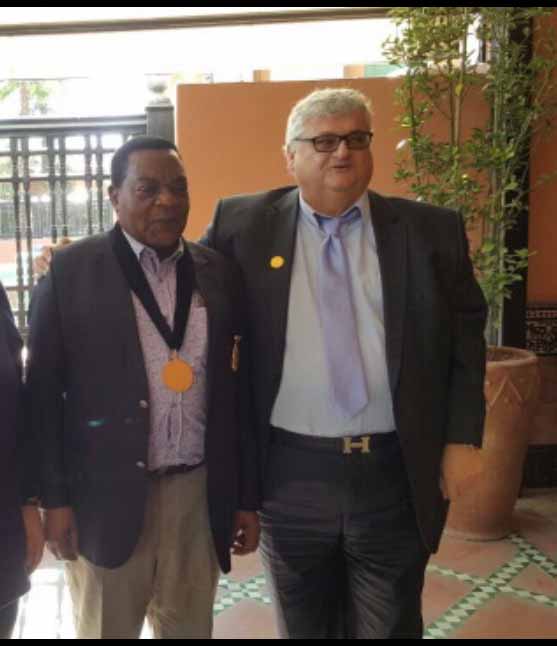
“It is with deep sadness that I learned this horrible news especially since we had spoken a few days earlier to develop our mutual aid for Tanzania and that he was in dazzling shape. I had often met him during trips to the Kingdom of Morocco when he was Minister of Foreign Affairs and had the honor of presenting him with the Medal of Peace. Our paths crossed again in Tanzania when he was Minister of Justice. His memory will forever remain in our hearts and today we especially think of his family and loved ones who loved him so much. »

Christophe Giovannetti, President of the UNF

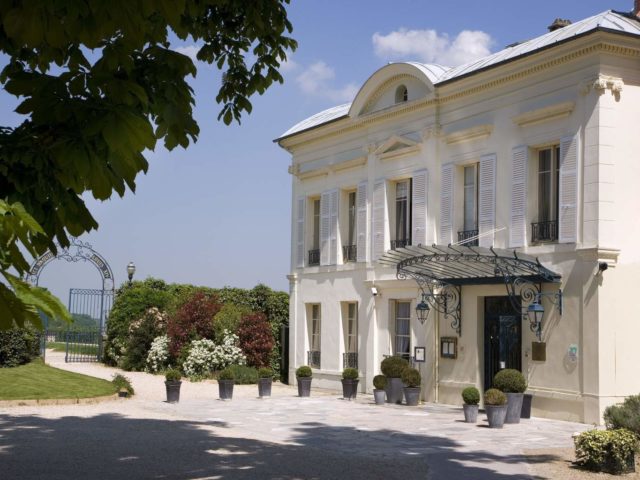
Impact of confinement on international tourism, discussions with Charles Erick Hoffmann, from the Pavillon Henri IV in Saint Germain en Laye.

Following the health provisions relating to COVID-19, some of our members and their friends and partners from many Foreign countries are confined to France, unable to gather with their families. Our member Charles Erick Hoffmann, of the splendid Pavillon Henri IV hotel in St Germain en Laye, was extremely kind enough to open and make his establishment available to several of our members, including our Vice President for Asia and Middle East, HE Bilal Ghamaroui, himself blocked in France for several weeks without being able to see his family and loved ones.
In addition to the human dimension of this meeting, we were able to discuss, under the strictest sanitary conditions, the disastrous financial impact of the Covid-19 on international tourism, and try to provide emergency solutions to this crisis, in order to support establishments, which, like the Pavillon Henri IV, have a great culinary and historical heritage.
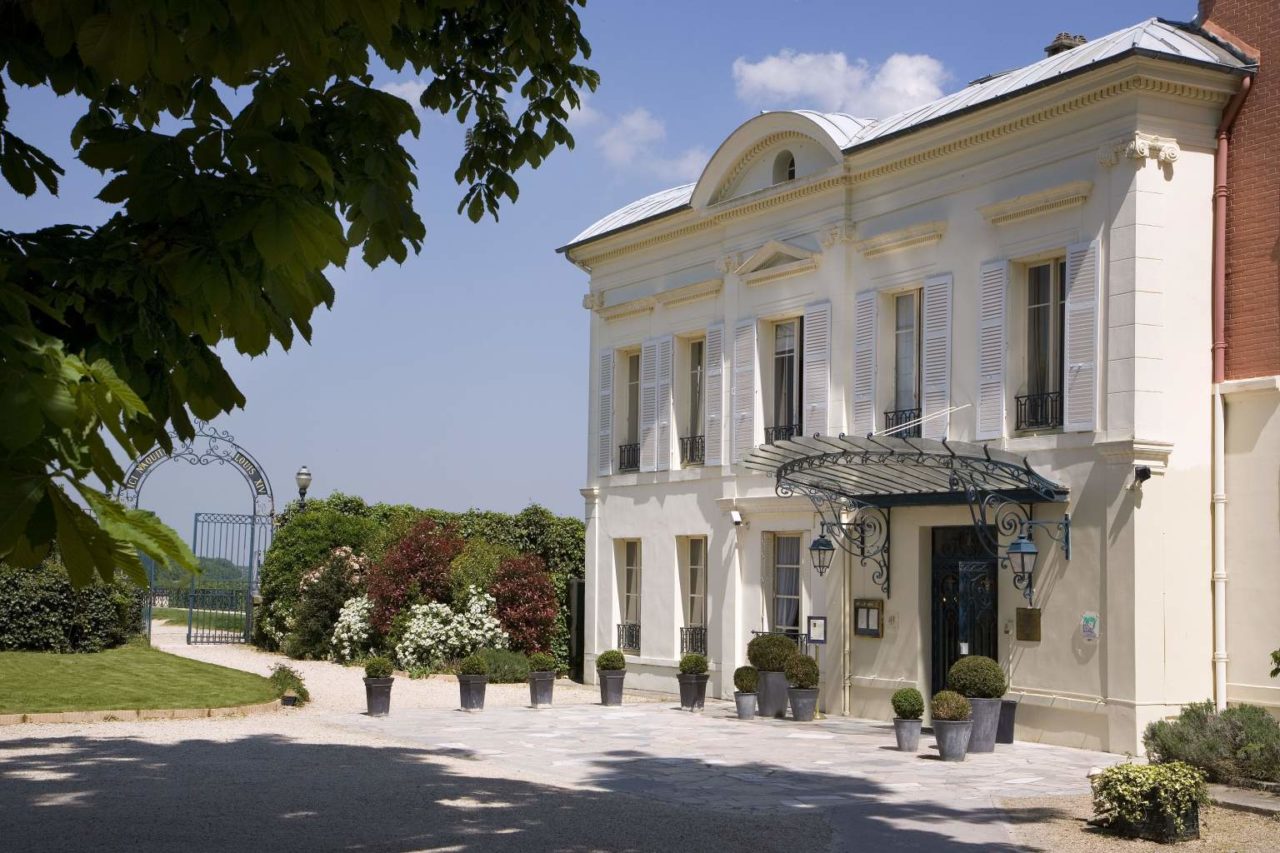
The Pavillon Henri IV, formerly the residence of King Louis XIV, opened at the beginning of the 19th century, has the soul of a former residence and houses 42 rooms, a restaurant, as well as reception and seminar rooms. The Pavillon Henri IV is built on the Terrasse de Saint-Germain, on the site of the Old Royal Castle. The living room in which the Sun King was born is currently one of the salons of the Pavillon Henri IV and is classified as a historic monument. The hotel staff speak several languages, including Arabic, to make everyone’s stay easier.
To all those in this position, we inform you that you can book your stay directly by contacting the Hôtel Pavillon Henri IV on behalf of the UNF.
Pavillon Henri IV
19 Rue Thiers 78100 St Germain En laye
Tel : +33 1 39 10 15 15
Email : [email protected]


In Yemen, he said, “despite expressed support for a ceasefire by the Government, Ansar Allah and many other parties — including the Joint Forces Command — the conflict has spiked”. He added that he asked the parties “to discuss COVID19 crisis management and a nationwide ceasefire mechanism” and called on “all Governments and movements involved and their supporters to end this catastrophic conflict and humanitarian nightmare and come to the negotiating table”.
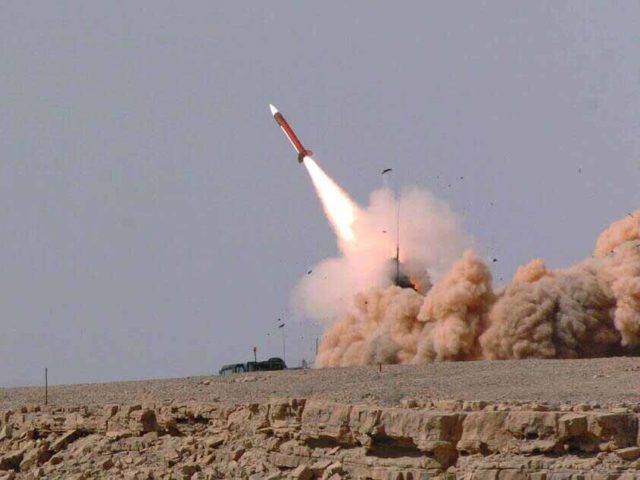
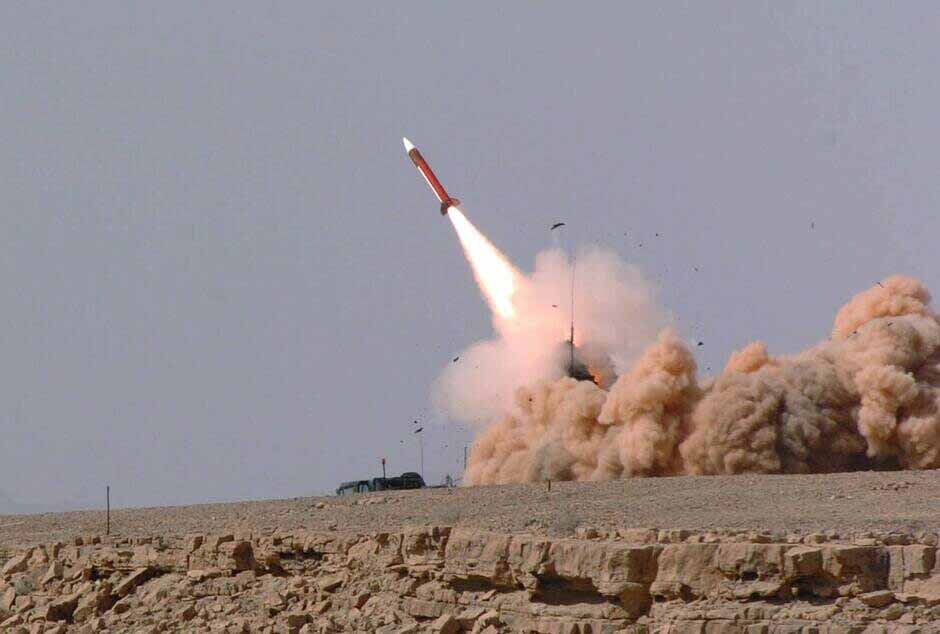
In view of that global and regional situation concerned by the evolution of COVID-19, the Non Governmental Organisation Union Nations Federation (UNF) strongly deplores and condemns the actions of the Huthis against Saudi Arabia, which consisted in firing two missiles at the cities of Riyadh and Jazan on 4 March, 2020.
The UNF unites its voice to that of the Union Nations Secretary-General and calls on for the cessation of these repeated hostile acts and for the implementation of related international resolutions.
Along with the international community, the UNF calls on for a collective action to address this COVID-19 pandemic, as a complementary alternative to the military and terrorists acts that have devastated the world in the past decades until now.

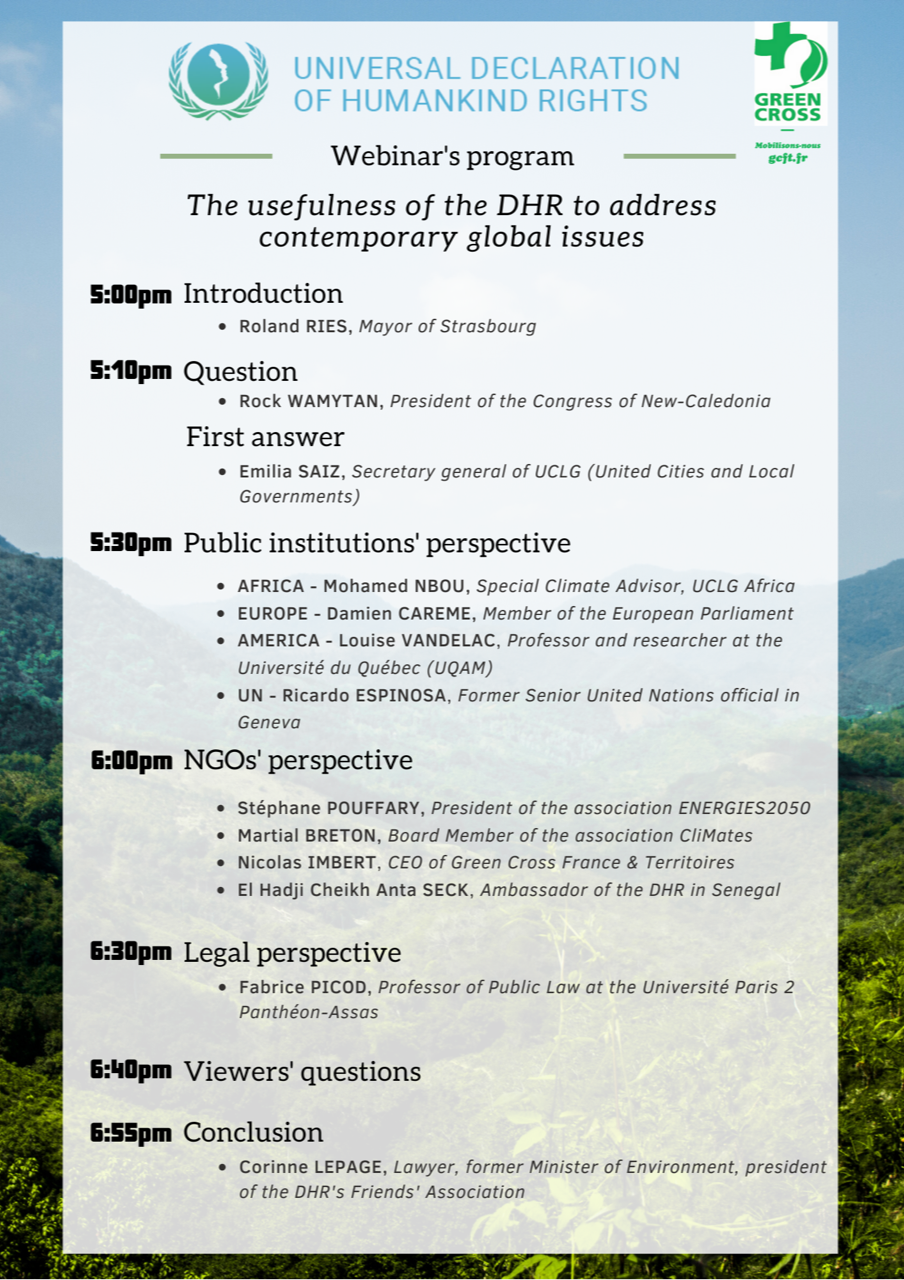
The UNF actively supports the Declaration of the Rights of Humanity. Ms. Corinne Lepage wishes to address the Members of the UNF as well as all of the Partner States of the UNF.
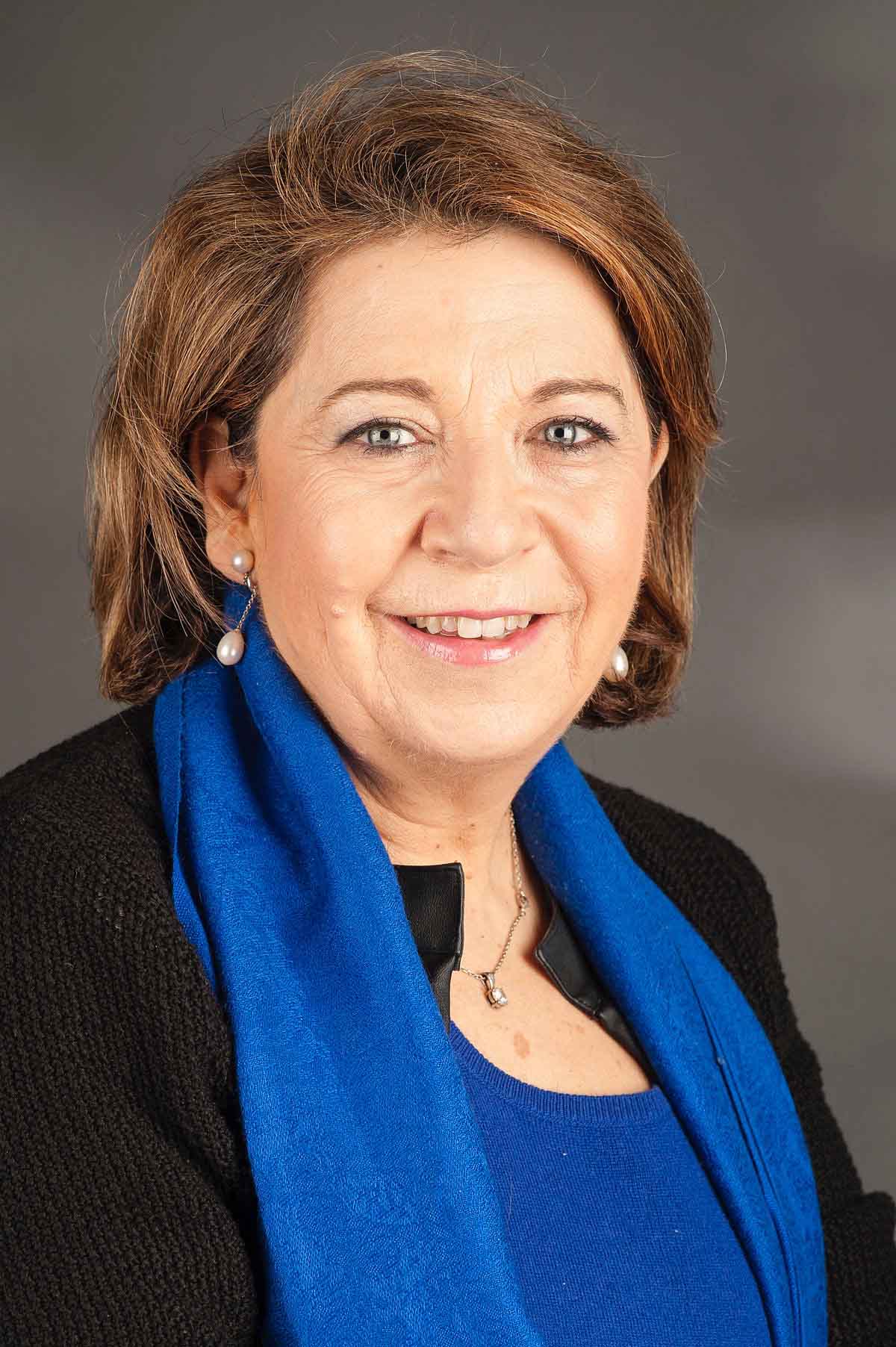
H.E Christophe Giovannetti, President of the UNF is happy to forward her message to you:
Par Madame Corinne Lepage, Présidente de la DDHU, Ex Ministre du Développement de la République Française.
The Universal Declaration of Humankind Rights is a particularly needed text for our times.
When it was requested by the President of the French Republic, written by the task force, adopted by a many public and private entities (in particular Union Cities and Local Governments which includes 240,000 cities and affects 5 billion inhabitants, very large cities of the world such as New York, San Francisco, Paris, Madrid and many others, about forty law societies, about sixty NGOs, etc.), the DHR appeared to be a declaration justified by the combination of ecological crises, the lack of access to resources for a large part of humanity, the ethical problems posed by technological progress and the risk of the disappearance of living beings.
Now, with the coronavirus pandemic and the immediate and future upheavals it is causing, this declaration of rights and duties appears even better adapted to our universal needs. Moreover, it may reinforce the objectives of sustainable development.
Almost all of humanity is confronted with this epidemic. Several billion people, albeit under very different conditions, are in quarantine and feel the fear of getting sick and the anxiety of the future. Humanity claims the right to live for everyone and accepts, with restrictive authoritarian measures,the duties that are necessary to safeguard everyone’s right to live. This is precisely the basis of the Declaration. Article 2 of the Preamble acknowledges the extreme seriousness of the situation, which is a matter of concern for all humanity and requires the recognition of new principles, rights and duties: here we are.
Article 3 of the Declaration, which is the third principle on which it is based, recalls that “the principle of the continuing existence of humankind guarantees the safeguarding and preservation of humanity through careful human activities respectful of nature, including human and non-human life”. The pandemic that we are experiencing reminds us, in a way, of the fragility of our existence, even if the virus is not the most violent that one can imagine. But the crisis we are experiencing clearly demonstrates our interdependence as human beings and our interdependence with nature. The right of humanity is the right to live, as it is the right of all living species. This is precisely what Article 5 proclaims: humanity, like all living species, has the right to live in a healthy and ecologically sustainable environment. It is precisely this right to live in an environment that does not contaminate us that is claimed and recognized.
However, this right has no meaning, value or effectiveness regarding duties, and in particular the right to ensure respect for the rights of humanity, including that of Article 5.
If these provisions might seem theoretical for some peoples, they are clearly no longer theoretical when, faced with the risk of disease which can affect everyone, the right to live in a healthy
environment takes on its full meaning as the duty to allow it, a requirement.
In the same way, Article 9 specifies that humanity has the right to human security in environmental, food, health, economic and political terms. Everyone today understands what health security means, whereas this concern may have concerned only a part of humanity until now. All countries, including the richest, all people today demand this safety.
Hence the duty contained in Article 14 to direct scientific and technical progress towards the preservation and health of the human species and other species. Today, everyone can only agree that this is the priority, because the endangerment of the health of the human species generates the endangerment of the entire economic and social organization, and consequently a vital risk for
humanity itself.
All that has just been recalled for health could be explained on the grounds regarding climate, living species and biodiversity in general.
The universal crisis that we are experiencing calls for a universal legal response that translates for humanity, conceived as the chain of generations, the rights and duties of each and every one for the benefit of all.
The Universal Declaration of Humankind Rights, already adopted by many cities, NGOs, public organizations, businesses, universities and law societies, is precisely a simple instrument, widely disseminated, which, in its flexibility, can serve as a cornerstone for the very many actions we will have to take in the future.